Guide
Walk-In Cooler or Freezer Not Cooling? A Restaurant's Emergency Guide
Your walk-in is warming and inventory is on the line. What to check, how to protect your product, and when to call for 24/7 commercial refrigeration service.
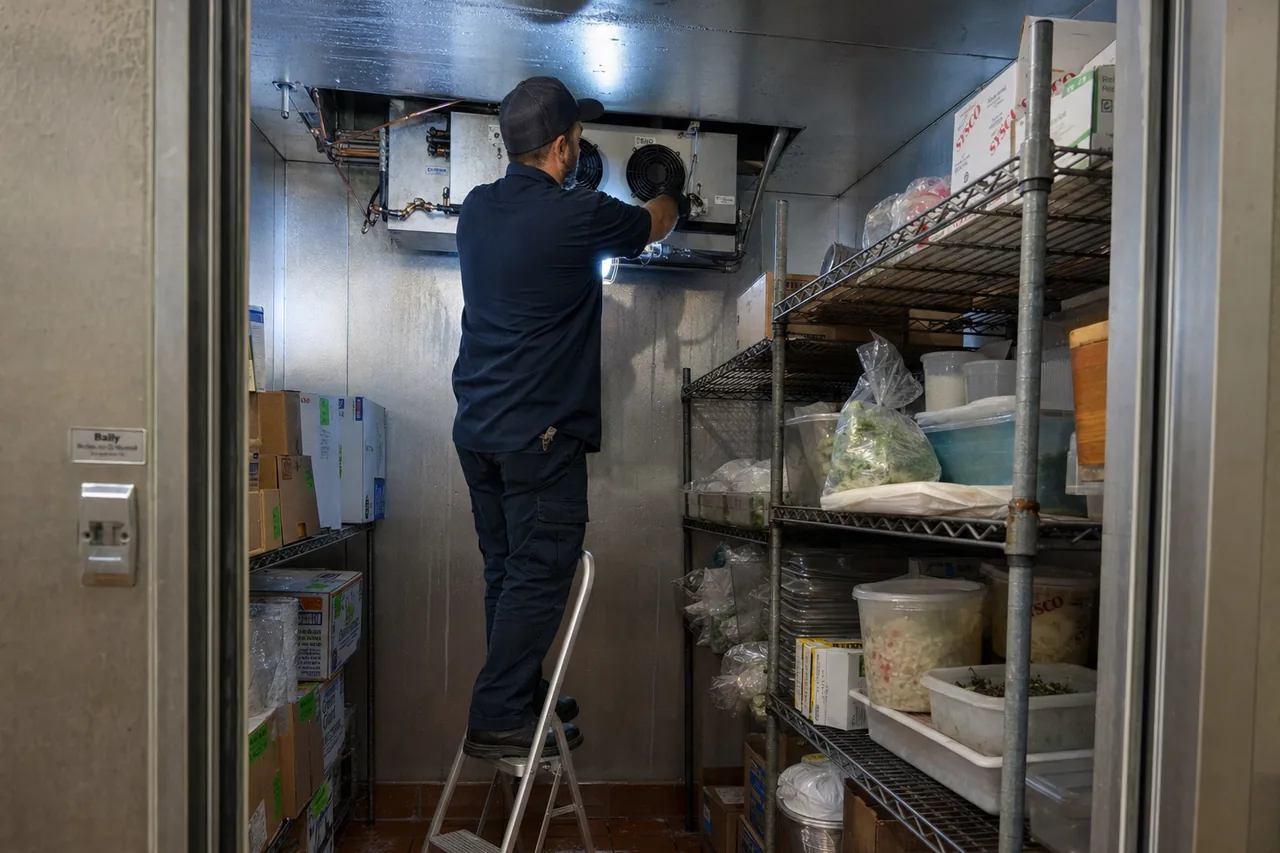
A warm walk-in is the most expensive failure in a commercial kitchen. Left unchecked overnight, a down cooler or freezer can spoil thousands of dollars of inventory and put you out of health-code compliance before you even open. When you find your walk-in warming up, the clock is already running — here’s how to respond.
First: protect your inventory
Before you troubleshoot anything, limit the damage:
- Keep the door closed. A full, closed walk-in holds temperature far longer than one that’s opened repeatedly. Every time the door opens, warm humid air pours in.
- Move the most perishable product — raw proteins, dairy, prepped items in the danger zone — to another working cooler, a reach-in, or a backup unit if you have one.
- Note the temperature and time for your food-safety log. If product sits above 41°F for an extended period, you’ll need that record for a discard decision.
- Call for service. A walk-in that’s genuinely losing temperature is a 24/7 emergency, not a next-business-day repair.
What you can safely check yourself
A few things are worth a quick look before the technician arrives:
- Is the condensing unit running? Find the condensing unit (often on the roof, in a back room, or on top of the box) and listen. If it’s silent, check that a breaker hasn’t tripped.
- Is the evaporator coil iced over? Inside the box, a coil buried in ice means a defrost problem — the airflow is blocked and the box can’t stay cold.
- Is the condenser filthy? A grease- and dust-blanketed condenser coil is the single most common cause of a warm box. If it’s caked, that’s very likely your culprit.
- Is the door sealing? A torn gasket, a failed door heater, or a sagging door lets warm air in constantly.
Do not attempt refrigerant work, electrical repairs inside the condensing unit, or anything requiring the panels to come off — that’s technician territory, and refrigerant handling is legally restricted to EPA-certified techs.
Common causes of a warm walk-in
Most walk-in failures come down to a handful of faults:
- Fouled condenser — high head pressure, box can’t stay cold, compressor overworks.
- Compressor or condensing-unit failure — the unit won’t run or won’t cool.
- Defrost fault — the evaporator ices over and airflow dies.
- Refrigerant leak — the box gradually loses temperature over days.
- Door seal failure — constant warm-air infiltration and frost.
When to call — and what we do
If the box is warming and basic checks don’t fix it, call for emergency service. A commercial refrigeration technician will triage the box, diagnose whether it’s a condenser, compressor, defrost, or refrigerant issue, and repair the actual fault — with EPA-certified recovery and recharge if the sealed system is involved. Critically, a proper repair ends with the walk-in verified back below 41°F and, where you need it, the recovery temperature documented for your food-safety records.
Don’t wait on a warming walk-in. The inventory loss compounds by the hour — and so does the food-safety risk. Call for 24/7 commercial refrigeration dispatch the moment you find the box warm.